Watershed Recovery#
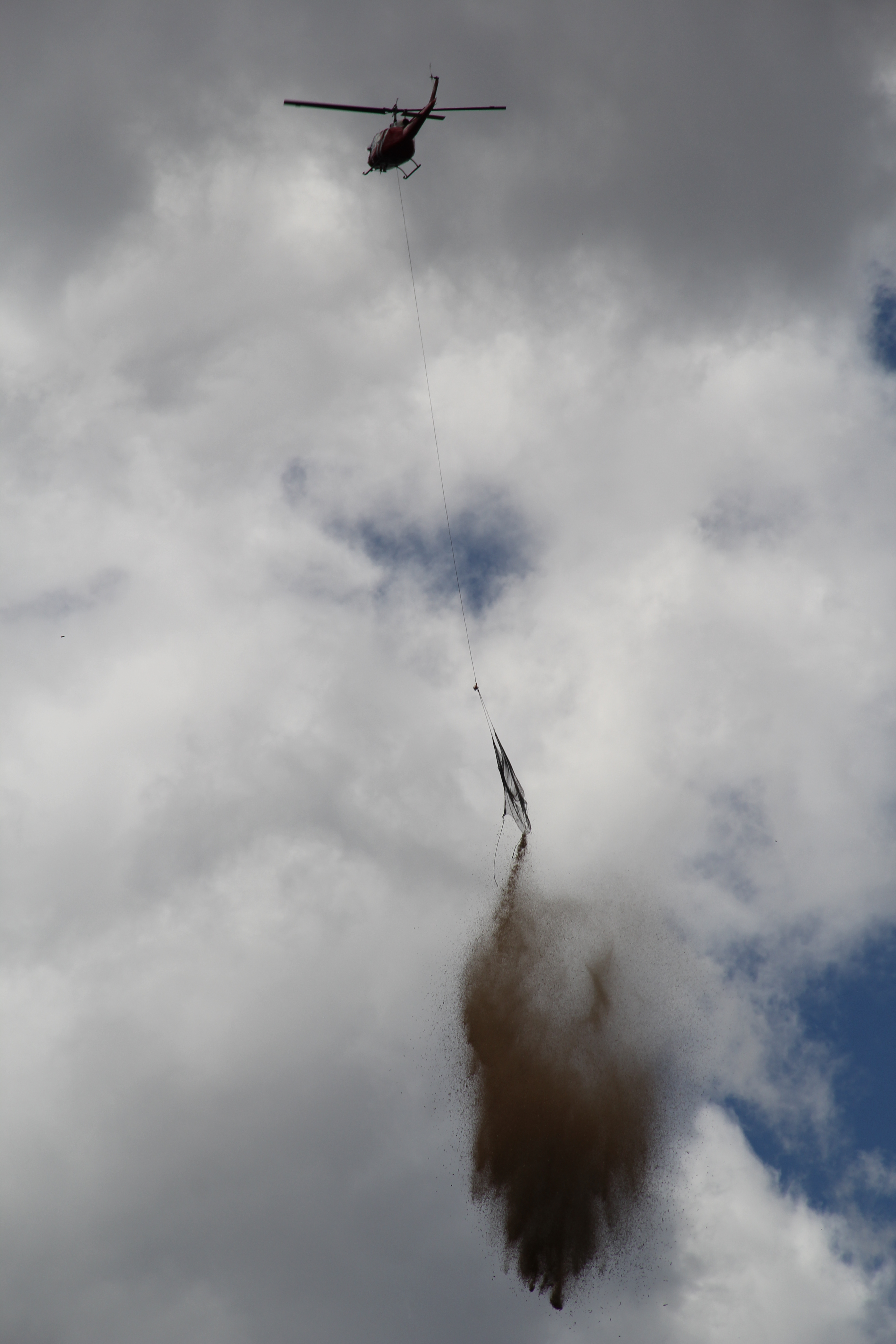
Helicopters drop wood mulch on the burn area.
Following the High Park fire of 2012, emergency hillslope stabilization measures have been implemented in the High Park Fire burn areas by the United States Forest Service (USFS) on federal Forest Service lands and on private lands through partnerships between the Natural Resource Conservation Service (NRCS), the Cities of Fort Collins and Greeley, Tri-districts, and Larimer County. In 2012 and 2013, 2,900 acres of wheat straw and 1,110 acres of wood mulch were applied to private land in the burn scar area.
Additionally, the USFS applied 4,700 acres of agricultural straw and 1,131 acres of wood shred to USFS lands. In 2014, a total of 250 acres of wood shred mulch was applied primarily in the Little South Fork Basin. The total area mulched represents approximately 11 percent of the burned area. The final phase of the NRCS Emergency Watershed Protection program was completed in 2014, and the watershed continues on a path toward natural recovery.

Landsat images collected from the USGS Land Remote Sensing Program. Click to enlarge.
Utilities will continue to monitor the effects of the fire-related runoff and take steps to monitor and protect the watersheds and mitigate the damage from the fire.
A detailed report on the initial effects of the recent wildfires on water quality is also available. Utilities' state-of-the-art water treatment process removes contaminants from raw water sources, beginning with the new presedimentation basin.
Fort Collins Utilities continues to collaborate with other water users and utilities including, Denver Water, Colorado State University, University of Colorado and Northern Water Conservancy District to respond to fire-related impacts in our watershed. Despite the impact of the fire, Fort Collins water supplies are sufficient to provide water to customers.
To report any water quality concerns, contact Utilities.
- Northern Colorado Business Review article: $2.35M Poudre Canyon culvert project starts this week – September, 9, 2013
- Coloradoan article: Millions still being poured into High Park Fire recovery – September 5, 2013
- High Park Fire Mitigation Work to Begin August 18 – August 16, 2013, News Release
- High Park Fire Response Timeline (PDF 87KB)
- High Park Fire Video
- Water Quality Fast Facts
Did You Know?
When it rains and as snow melts, runoff carries pollutants such as oil, antifreeze and gas down storm drains, contaminating our rivers, streams and lakes. Don't drip and drive.
Information about business-related programs and rebates regularly goes out in the Keep Current e-newsletter.
In warm seasons at night (when temperatures are cooler), open windows when you feel comfortable doing so (i.e. in calm weather condition, with a window stopper in place, during clean air days, etc).